LinkedIn is the single most underused career tool in the ESL industry. Most teachers treat it as a digital resume they update once every few years — and as a…Read more
Networking has a sleazy reputation — visions of forced small talk, business cards, and transactional LinkedIn messages. But in the ESL industry, networking is…Read more
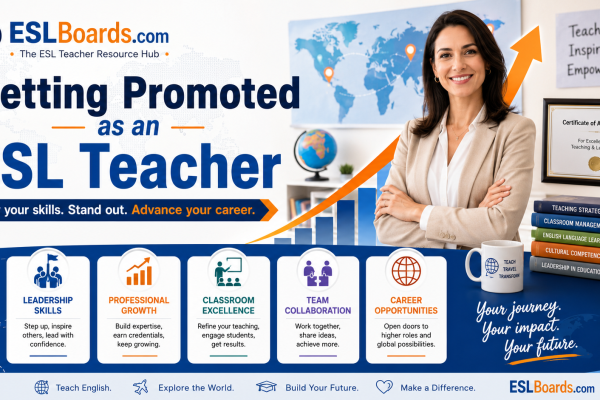
Promotion in the ESL industry doesn't look like promotion in a traditional corporate career. There's rarely a tidy annual review cycle, a clear org chart, or…Read more
One of the biggest frustrations in the ESL industry is how quickly salaries plateau. You start at a language center, you work hard for a year or two, and the…Read more
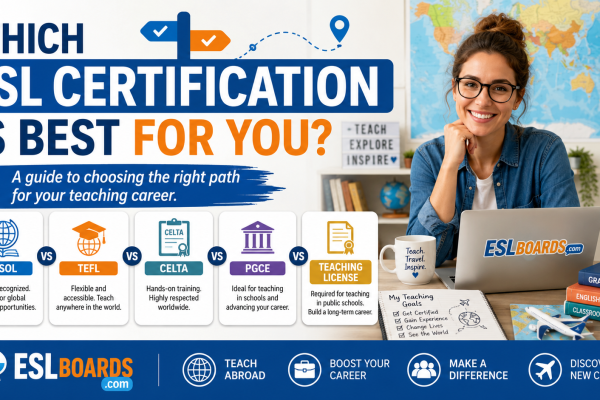
"Which ESL certification should I get?" is the single most common question aspiring English teachers ask — and the most frustrating to answer, because the…Read more
The PGCE (Postgraduate Certificate in Education) is a UK-recognized teaching qualification that qualifies you to teach in state schools — and increasingly,…Read more
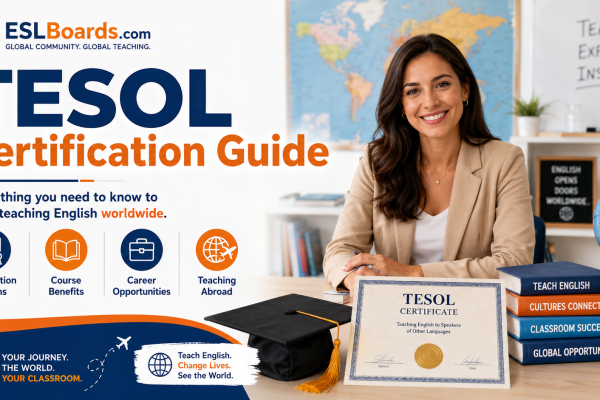
TESOL (Teaching English to Speakers of Other Languages) is one of the most widely used — and most widely misunderstood — terms in the ESL world. Is it…Read more
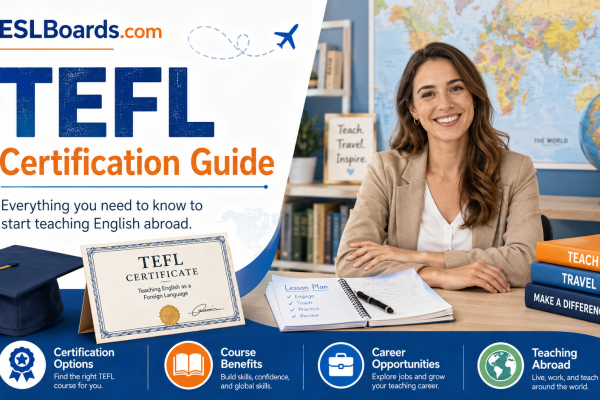
TEFL (Teaching English as a Foreign Language) is the world's most popular entry point into English teaching. It's the certification most first-time teachers…Read more
If you're applying for ESL jobs in China, South Korea, the Middle East, or large parts of Southeast Asia, you will almost certainly work with a recruiter.…Read more
Timing is one of the most underappreciated levers in an ESL job search. Apply in the wrong month and you'll wait weeks for replies, compete against a flood of…Read more