Freelancing is one of the most liberating and lucrative paths in ESL — and one of the most misunderstood. Done well, it gives you control over your schedule,…Read more
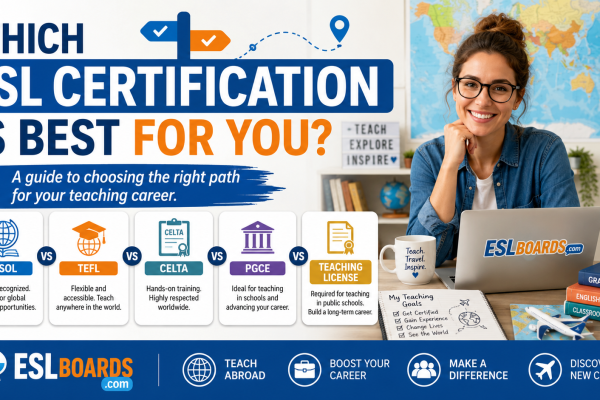
TEFL (Teaching English as a Foreign Language) is the world's most popular entry point into English teaching. It's the certification most first-time teachers…Read more
TESOL (Teaching English to Speakers of Other Languages) is one of the most widely used — and most widely misunderstood — terms in the ESL world. Is it…Read more
CELTA (Certificate in Teaching English to Speakers of Other Languages) is the gold-standard entry-level teaching qualification. Awarded by Cambridge Assessment…Read more
The DELTA (Diploma in Teaching English to Speakers of Other Languages) is Cambridge Assessment English's advanced, post-experience teaching qualification. If…Read more
The PGCE (Postgraduate Certificate in Education) is a UK-recognized teaching qualification that qualifies you to teach in state schools — and increasingly,…Read more
"Which ESL certification should I get?" is the single most common question aspiring English teachers ask — and the most frustrating to answer, because the…Read more
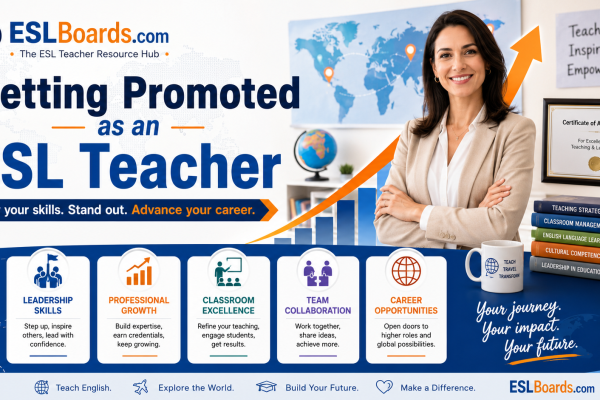
One of the biggest frustrations in the ESL industry is how quickly salaries plateau. You start at a language center, you work hard for a year or two, and the…Read more
Promotion in the ESL industry doesn't look like promotion in a traditional corporate career. There's rarely a tidy annual review cycle, a clear org chart, or…Read more
"Personal brand" sounds like corporate jargon that doesn't belong in teaching. But in the ESL industry — where reputation travels fast, students choose tutors…Read more